

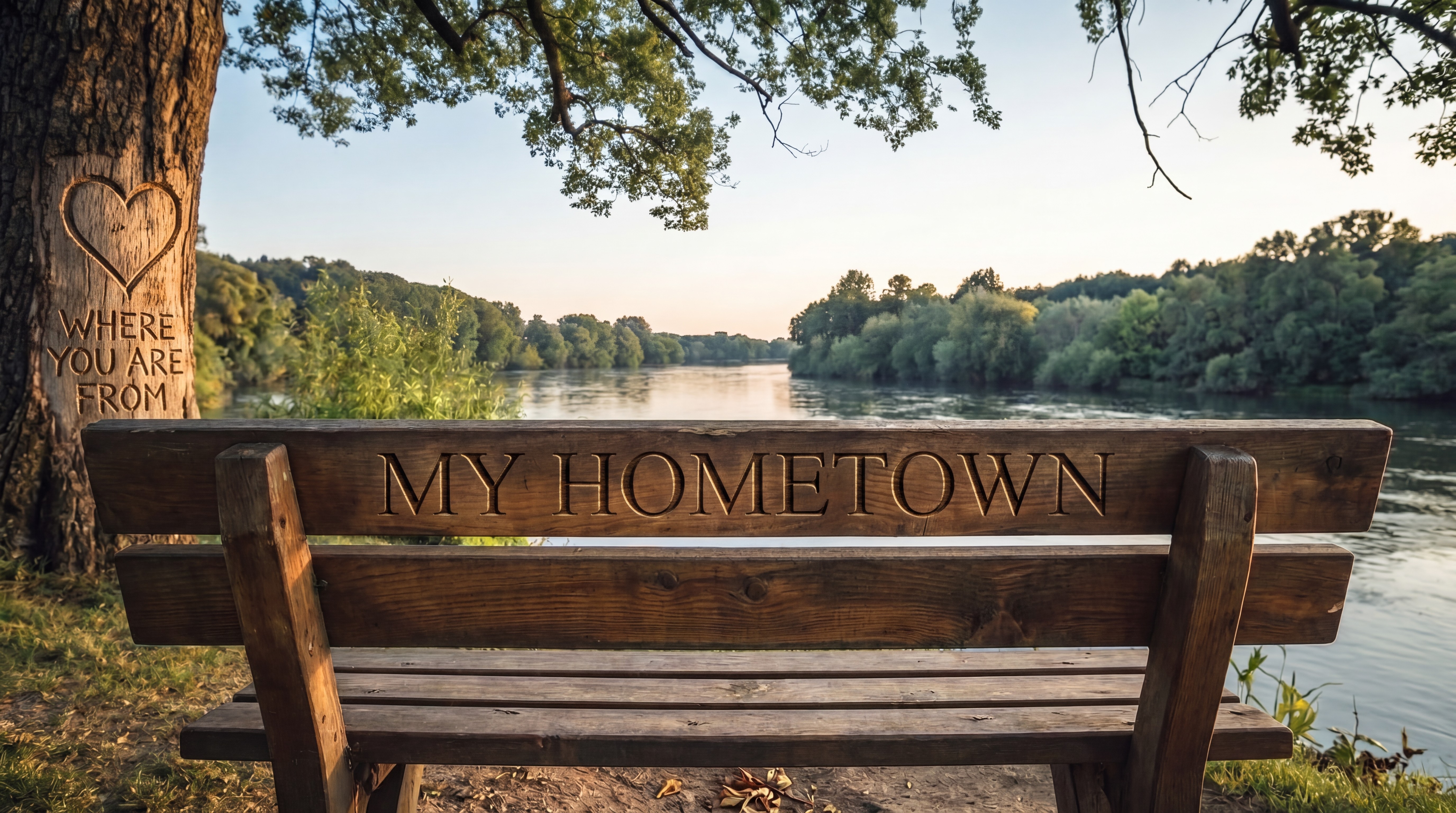
A place that shaped them. A place they'd defend at dinner. A place they could show you better than any guide, any app, any algorithm — because they didn't research it. They lived it.

My Hometown begins with one question:
If someone gave you one weekend and $4,000, could you build the greatest hometown experience imaginable — for someone who has never been there?
Where would they stay? Where would they eat? What would you make sure they saw? What hidden places would you take them that no travel guide has ever heard of?
And what story would you want them to leave with?
And could the weekend you create be better than the one the other team creates?
The Format
Each episode, two teams from two different towns answer that question — on paper, in advance, completely.
Every stop chosen. Every dollar accounted for. Every surprise sealed.

All of it goes into an envelope.
Then the teams trade hometowns. Each spends one weekend living an adventure authored by the very people they're competing against — a treasure map written by the only people qualified to write it.
The authors can't tag along. They can't explain, adjust, or apologize. The envelope has to speak for them — so it better be good. Your hometown, defended in absentia, by your own handwriting.
And the swap cuts both ways: while you're off living their weekend, strangers are living yours — sitting in your grandmother's diner, ordering the thing you insisted on, standing at the overlook at the exact hour you specified. You don't get to watch it happen.
The two teams never cross paths. For the whole weekend, the only contact between them is the envelopes they traded — and every team spends that weekend far from home, holding the other team's map, wondering whether their own envelope is standing up.
That wondering changes how you travel. The envelope is out of your hands now; the only half of this still in your control is the weekend you're living. Because in this game, being a great guest is a metric too — how hard you lean in, how much you make of the envelope you were handed, can win or lose this thing just as surely as the map you wrote.
Not to show off. Not to boast. To let a stranger find the heartbeat of a place — and leave carrying its story.
The Skill
Every competition tests something. Singing. Cooking. Surviving. This one tests something no show has ever scored: the way you've lived.
You have to be fully alive to write a winning envelope.
The skill here is a life. The nights you got up and went. The places you ventured, the adventures large and small, the years spent finding the good spots and the right people. Every team walks in carrying a database nobody can borrow — the best of where they're from, learned the only way it can be learned: by putting in the time. By loving where you're from. The winners are those who best capture the very best the place they're from has to offer.
You can't cram for this show. There's no boot camp, no coach, no montage. The preparation was your whole life, and it started years before you ever heard of us. The pair who knows which counter to sit at, what hour the light hits the overlook, which door to knock on — they didn't research that. They earned it, every Monday through Friday and Friday through Monday of their lives.
Which means the show quietly rewards the exact thing it's asking the country to do: go out, look around, put in the time. The only way to train for My Hometown is to live better in yours.
Money can't buy an advantage in this game. Ten years of living well is one.
The Draw
Where do the teams come from?
They mail themselves in.
Any two people who share a town can become a team: seal its best weekend into an envelope and send it in. Every envelope goes into one hat. The matchups are drawn blind — no brackets, no regions, no casting directors sorting anyone by type. The hat doesn't check the map.
That blindness is the whole bet: pull any two envelopes in this country at random, and the people who wrote them will understand each other by Sunday night.
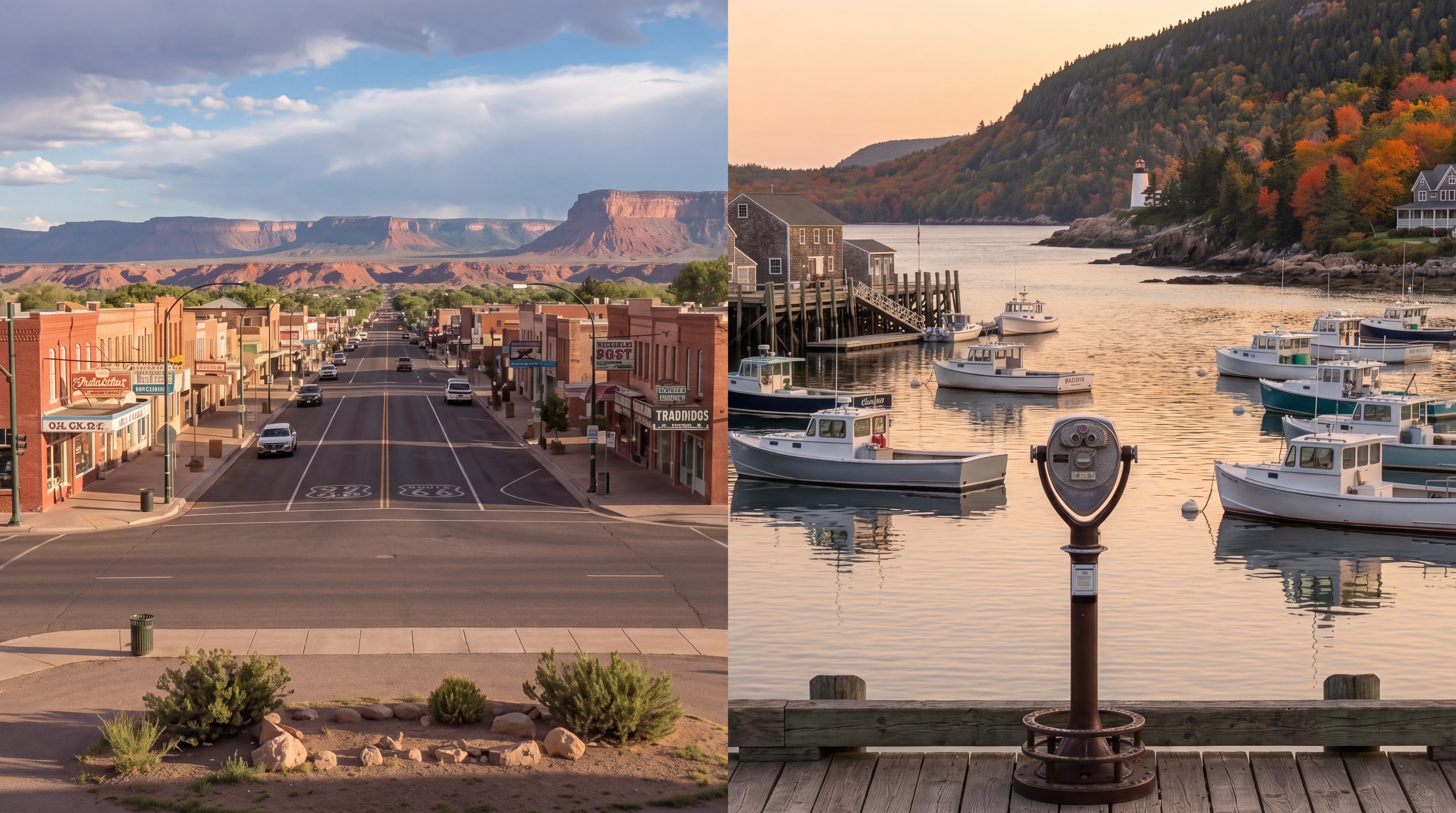
And the hat does what no producer would dare — it matches opposites. A Gulf shrimping town living a Montana ranch town's weekend, and vice versa. A border town and a fishing village. Lace-curtain Vermont and oil-patch Texas. That collision is where stereotypes go to die — not argued away, but replaced: by a diner conversation, a sunrise somebody planned for you, the discovery that a stranger's beloved place can feel like yours by the second day.
Similar towns compete. Opposite towns convert.
The hat keeps delivering the second kind of television. And every week, the country watches four people live the very best of a life they may have only known through stereotypes — and watches those stereotypes fail to survive the weekend.
And at the end of every episode, the winners reach into the hat on camera: each pulls one envelope, and the two teams they draw go head to head next week.
The Score
Winning My Hometown requires two things most shows have never asked for at the same time: be a great host, and be a great guest.
THE WEEKEND
50
THE SECRET THREE
30
THE ENVELOPE
20
The Weekend — 50%
Each traveling team scores the experience they were given: the meal, the hidden place, the people, the story they're leaving with. You win by hosting brilliantly from inside an envelope.
The Secret Three — 30%
Before the swap, each team quietly selects three locals stationed inside their itinerary — the diner owner, the barber, the woman at the farm stand. The visitors never know who they are. The secret judges aren't scoring the weekend; they already know the weekend. They're scoring the guests. Did these strangers really show up? Ask questions? Put the phone down? Order the thing?
Then, at the end of every episode: the unmasking.
"The woman who sold you peaches Saturday morning — she's been scoring you since Friday."
Once viewers learn that reveal is coming, they watch every handshake in the show differently.
The Envelope — 20%
The hosts score the craft of the map itself: the thought, the generosity, the storytelling per dollar.
Viewers hold the tiebreak — enough power to matter, never enough to turn the show into a fanbase-size contest.
And here is the format's quiet piece of game theory. Half your score is given by your rivals — they lived your weekend, they rate it — so the obvious exploit is to sandbag: shrug at the overlook, lowball the diner, protect your lead. Except you were never alone out there. Three locals you couldn't identify were scoring your spirit the whole time. A host lived every hour at your elbow. The audience watched exactly how much fun you actually had — and holds the tiebreak. Score a weekend you visibly loved a four, and you haven't hurt your rivals; you've exposed yourself, on camera, to everyone. In this game, bad faith is always visible — which makes sincerity the winning strategy. Most competition shows make ruthlessness optimal and then beg their contestants to be kind. This one makes kindness the smart move.

The Hosts
The format is built for three: one host embedded with each traveling team, living the weekend beside them, and one holding the center. Host scores aren't opinions from a couch — they're eyewitness testimony. Three hosts, no ties, ever.
Built for a trio with a hometown story of their own. Built, if the stars align, for three brothers from a small town in New Jersey whose entire mythology begins with the words back home.
Timing
The country doesn't have a content problem. It has an adventure deficit.
We've spent years indoors and online — fed, filtered, and flattened. Every feed says the world is ending; every algorithm says stay where you are. What people are starving for isn't more content. It's permission — to get in the car, to talk to a stranger, to believe adventure isn't reserved for faraway places when it's idling three blocks from the house.

And the shelf is empty exactly where this sits. There are travel shows. There are competition shows. There are makeover shows. Nothing collides them like this — nothing hands the authorship to the locals, seals it, swaps it, and scores the caring. The intersection is wide open, and it happens to be the intersection people are actually living at.
One more thing, for the marketing department: the premise is a conversation America already wants to have. What would your weekend look like? Ask it at any dinner table and watch what happens.
The Kind of Show
This show was not created to expose people. It was created to discover them. Nobody walks a plank. Nobody gets a villain edit. We're not here to exploit anyone — we're here to give you the best possible chance of being understood.
Life happens in a hometown, and life doesn't give anyone a free pass. If you have what it takes to write your best weekend, seal it, and send it in, then you have already earned our respect. This show is not trying to be the next anything. The ambition is to capture every town and every team with unwavering truth.
The emotion doesn't come from an edit bay. It comes from what happens when a person gets understood — sometimes for the first time, on camera, by strangers who turn out not to be strangers at all. That's the fresh thing. Sincerity is the last surprise television has left.
The people making this show have hometowns too. Real lives, real places they're from, real reasons to care whether this gets made honestly. You can't make something special by treating people like content. We're in this to make something special.
The Mirror
Every format has a secret about where the show actually lives. Ours has three layers.
It looks like the show is the show — the race, the scores, the unmasking.
Then it looks like the towns are the show — the diners, the overlooks, the people.
But the truth is: the viewers are the entire show. Because the first thing this format does to anyone who touches it — a reader, a viewer, a buyer — is make them start writing their own envelope. Which diner. Whose farm. The one place they'd defend with their whole chest. They're not watching contestants. They're rehearsing.
And The Draw gives the rehearsal stakes: the hat is open, and entering starts with a phone call — want to do this with me? Every viewer is one partner away from being in it. This isn't an audience. It's a waiting room of future teams, arguing at dinner about what belongs in their envelope.
The Camera
Reality television fights for access. This format is handed it.
Because the people designing every shoot are the people who love the place, the show gets what no location scout could ever buy: the bakery at 4 a.m., the back room of the barbershop, the widow who owns the overlook telling the story she doesn't tell tourists. Moments that aren't purchasable at any line-item price — because they're not for sale. They're given.
And the envelope makes the magic technically exploitable: every location is locked weeks in advance, so the DP can scout, plan light, and be standing at the overlook at golden hour on purpose. Scripted-grade cinematography inside an unscripted show. Every town dresses its own set — and does it for love.
This format has structurally better access than any reality show on television — and the access costs nothing, because it's the premise.
The Economics
$4,000 is the point.
Small enough that money can never buy the win. Big enough to build something unforgettable. The budget turns every team away from luxury and toward meaning — the score literally rewards storytelling per dollar. The best television in this show will be the cheapest thing in the envelope: the free overlook at the right hour, the two-dollar coffee with the right person on the next stool.

And every episode leaves a town better than it found it. The diner becomes a destination. The farm stand gets a line out the door. The show's sets are real businesses in real towns — and a broadcast is the best advertisement a small town has ever had.
The Season
A season-long leaderboard: every team's score stands all year, every new episode reshuffling the standings.
And the seasons never go stale, because the format carries its own renewal engine: the hat. No theme years, no regions, no gimmicks — every season is new because the map never runs out. There are nineteen thousand towns in America, and the show has met almost none of them.
At the end of the year, the two best teams win the only prize that fits this show: their towns host the hosts. One last envelope. One last weekend. The judges, finally judged.
Why It Matters
Sometimes it takes a stranger discovering your hometown to remind you why you fell in love with it yourself.
From the first episode, people won't just watch and move on. They'll close the laptop, call a friend, get in the car, and go stand somewhere they'd forgotten they loved — already planning the weekend they'd build for someone else.
And the real magic lives in three words: for someone else. Every envelope in this show is written for a stranger — not someone like you, not someone who thinks like you, just someone else who calls this country home. You craft your best weekend without knowing who will live it, which means you craft it with unconditional love. The timing for those three words to trend could not be better. And somewhere in the planning, half the country will look up and say the quietest, best line in the whole show: "maybe we should go do this fun thing we planned."
That's when My Hometown stops being a television show.